ITV's Christmas ad warning shows where British brand money is really going
ITV expects fourth-quarter ad revenue to fall by up to 10% and is cutting £30m in costs, while the UK ad market heads for a record £51.3bn and social media spend grows more than 20%. YouTube now takes 15% of in-home viewing.

ITV has given British marketers a clear picture of where advertising money is and isn't going this year. In its third-quarter trading update on November 11, the broadcaster said total advertising revenue fell 8% in the three months to September and warned that the fourth quarter, normally its most valuable, would be down by around 5% to 10%.
To protect profits, ITV said it had found £30 million of temporary savings in its Media and Entertainment division for the final quarter: £25 million from content and £5 million from other spending. Deadline reported that ITV's shares fell nearly 5% in early London trading after the warning.
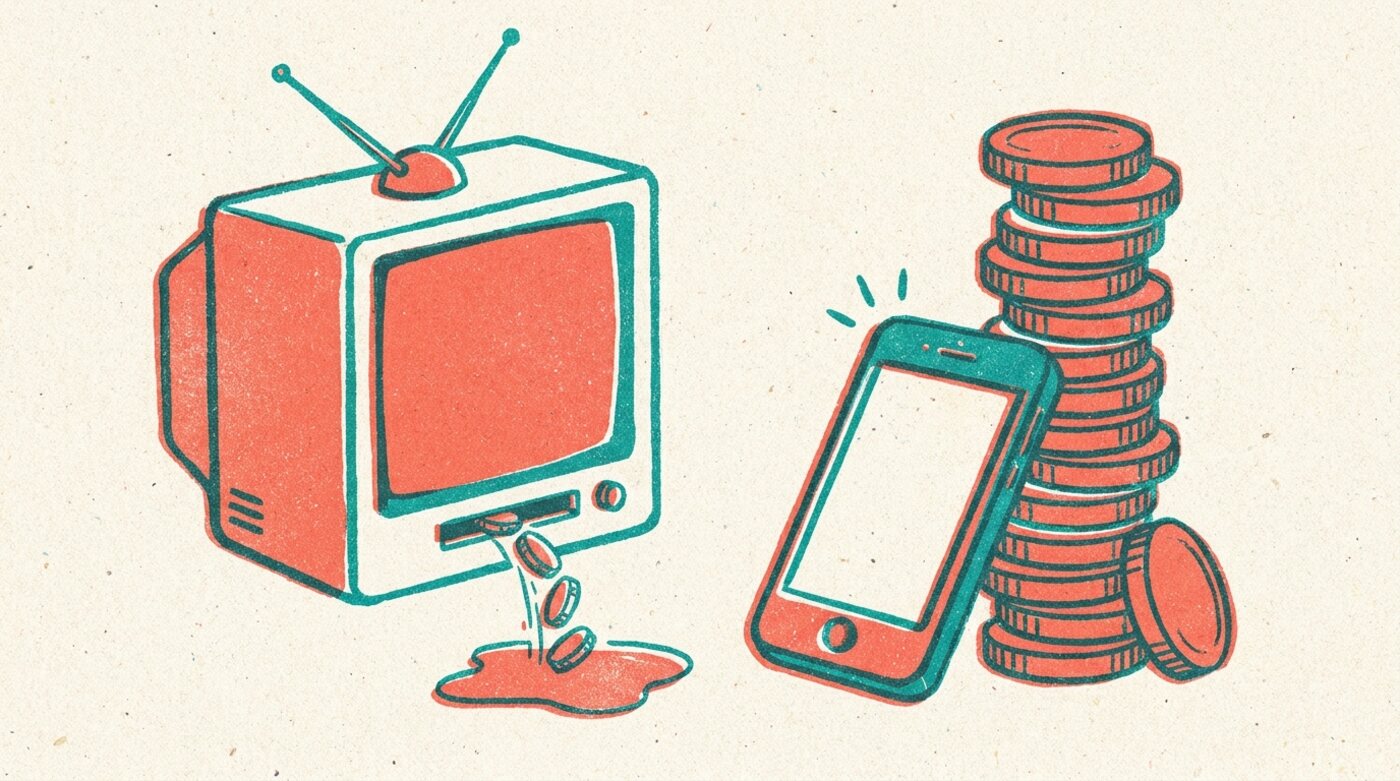
The same fortnight brought very different numbers from the rest of the UK market. Taken together, they show British brand budgets still growing strongly, just not on traditional television.
What ITV said
Chief executive Carolyn McCall said that "demand for advertising in H2 has weakened". She gave three reasons: continuing economic uncertainty, "increased digital advertising on global streaming platforms", and the UK's restrictions on advertising less healthy food, which took effect in October 2025.
ITV now expects full-year advertising revenue to fall by around 2% to 3%. According to PPC Land's analysis of the update, the six analysts ITV polled before the results had expected the fourth quarter to fall only 1.8% on average, so the warning came as a surprise.
There was some good news. ITV's digital advertising revenue rose 6% over nine months, and streaming hours on its ITVX service rose 29%, helped by the World Cup and Love Island. But that growth is not yet big enough to offset the decline in linear TV ads. The update also comes while Sky, owned by Comcast, is buying ITV's Media and Entertainment business for up to £1.6 billion, a deal expected to complete in the second half of 2027.
Meanwhile, the UK ad market is booming
Two weeks earlier, on October 29, the Advertising Association and WARC published their latest UK forecast. It puts total UK ad spend at a record £51.3 billion in 2026, up 9.9% on last year, with £14.0 billion expected in the festive fourth quarter alone.
The split by channel shows where that growth is going:
- Social media: forecast to grow 20.7% in 2026, and 18.5% in the fourth quarter.
- Search: up 9.1% for the year.
- TV overall: up just 0.9% for the year, and 1.6% in the fourth quarter.
- Addressable TV (ads targeted through streaming and connected TV): up 14.7%, which shows money is following viewers onto streaming rather than leaving television altogether.
In other words, the market is growing by nearly a tenth while the UK's biggest commercial broadcaster expects its ad revenue to shrink. The AA/WARC figures do not include a separate line for influencer or creator marketing, so they cannot show exactly how much is going to creators. But social media, where most creator content and paid amplification sits, is the fastest-growing major channel by a wide margin.
The audience moved first
The viewing data explains the advertising data. Ofcom's Media Nations 2026 report, published in July, found that YouTube accounted for 15% of all in-home video viewing in the UK in 2025, just behind the BBC at 18%. YouTube viewing on television sets has roughly doubled since 2022, from 9 minutes to 19 minutes a day, so creator video is now competing with ITV on the same screen in the living room.
According to informitv's analysis of the Ofcom report, broadcasters' programmes made up 53% of in-home video viewing in 2025, and Ofcom expects that share to fall below half in 2027. Among 16 to 24-year-olds the gap is far wider: they watched an average of 82 minutes a day on video-sharing platforms, compared with just over half an hour of broadcaster programmes.
McCall's phrase "global streaming platforms" covers Netflix, Amazon and Disney as well as YouTube, and much of their advertising goes on professionally made shows, not creator content. But on YouTube, TikTok and Instagram, a large part of what audiences watch, and what advertisers buy around, is made by creators.
What it means for creators
A weak quarter for ITV does not mean money moves straight to creators. Most of the social budget still goes on platform ads bought through Meta, Google and TikTok. But UK creators can now point to official figures, from Ofcom and the industry's own ad forecast, showing that their audiences are watching on the main TV screen and that social is where growth budgets are going. That is a stronger argument in rate negotiations than follower counts alone, especially for creators with long-form YouTube audiences who watch on television sets.
Creators should also expect British broadcasters to compete harder for the same budgets. The BBC agreed earlier this year to make programmes specifically for YouTube, and Channel 4 already runs its Channel 4.0 brand there. More broadcaster content on creator platforms means more competition for attention, but also more chances to work with them.
What it means for brands and agencies
For UK planners, the question is no longer whether to move money from linear TV to social and creators, but how to measure it properly. TV still offers mass reach that no single creator can match, and ITV's family of channels raised its share of UK commercial viewing this year. The brands best placed for 2027 will treat creator content and YouTube on the TV screen as part of the TV plan, with comparable reach and attention data, rather than a separate "influencer" line that gets cut first when budgets tighten.
Why it matters: In the same fortnight, Britain's biggest commercial broadcaster warned of a fall of up to 10% in its Christmas-quarter ad revenue, while the industry forecast social media spend growing more than 20% in 2026. Viewers moved to YouTube and social video first; the advertising money is now following them, and creators are a growing part of where it lands.