The creator midterms: how influencers fought the 2026 election, and what a Democratic Congress means for social media law
Both parties hired creators, briefed them like reporters and gave them their own lounges. Now Democrats control Congress. Here is how creators shaped the campaign, where each party stands on social media rules, and what changes for the creator business.
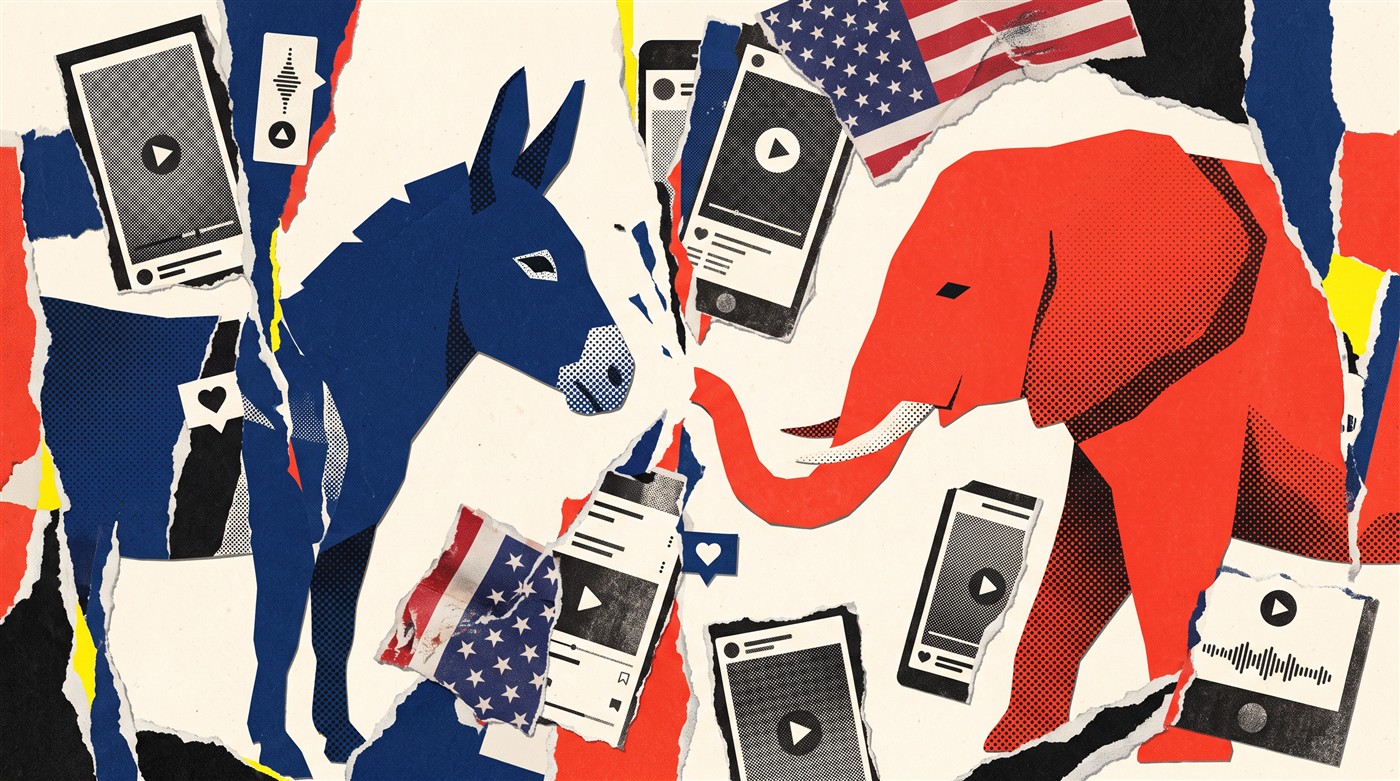
Updated November 18, 2026: The Associated Press and NBC News have called Alaska's Senate race for Democrat Mary Peltola, giving Democrats nine Senate flips and a 56-44 majority.
On Tuesday night, Democrats won control of both the House and the Senate. NBC News projects the party will hold at least 259 House seats, its biggest House total in more than 30 years, and Democrats flipped Senate seats in Alaska, Iowa, Kansas, Ohio, Maine, Mississippi, North Carolina, South Carolina and Texas. The Associated Press called Mississippi for Scott Colom on November 11, more than a week after election day, and Senator Cindy Hyde-Smith conceded in a video, saying she respected "the decision of Mississippi voters", Fox News reported. The last race, Alaska, was called for Democrat Mary Peltola over Senator Dan Sullivan on November 17. With 290,003 ballots counted, she had 50.1% of first-choice votes to his 45.8%, enough to win without a ranked-choice round, the Associated Press reported. That gives Democrats a 56-44 Senate majority, according to the AP and NBC News. Sullivan has not conceded; his campaign said it would let the process "run its course until every legal vote is counted and certified", NBC News reported. When the new Congress meets in January, President Trump will face a Democratic majority in both chambers for the last two years of his term.
Most of the analysis will be about prices, corruption, Trump's approval rating and, unusually, AI data centers. But this was also the first midterm in which content creators were treated as a core part of the campaign rather than an experiment. Both parties built creator programs. Both briefed influencers like reporters. Both ran into trouble over who was paid and who said so.
The result also changes who writes the rules for the platforms creators depend on. This guide explains both halves: how creators fought the 2026 election, and where Democrats and Republicans stand on social media and advertising law now that the balance of power has shifted.
The results in 60 seconds
Sources: NBC News projections and exit poll; CNBC Voter Poll; AP race calls. House figures as of November 11 and may change as counting finishes.
The new House, seat by seat
The headline races told a clear story. In Texas, Democrat James Talarico beat Attorney General Ken Paxton to become the first Democrat elected to the Senate from the state in nearly four decades, and Democrat Gina Hinojosa beat Governor Greg Abbott, CNBC reported. In Ohio, Sherrod Brown beat Senator Jon Husted. In Maine, Troy Jackson defeated Senator Susan Collins. In Michigan, Abdul El-Sayed beat Republican Mike Rogers and became the first Muslim elected to the Senate, according to NBC News.
Money did not decide it. Elon Musk, the cycle's largest individual donor, spent heavily to help Republicans, including more than $200 million around the Texas race, CNBC reported. Talarico turned that into a campaign line, accusing Musk of trying to buy "his very own personal United States Senator". A CNBC analysis of federal filings found crypto, AI and online gambling interests together put in more than $377 million, most of it behind Republicans.
Young voters moved toward Democrats. In Michigan, El-Sayed won 69% of voters under 30, NBC's exit poll found. That is the group most likely to get political news from creators rather than from TV or newspapers.
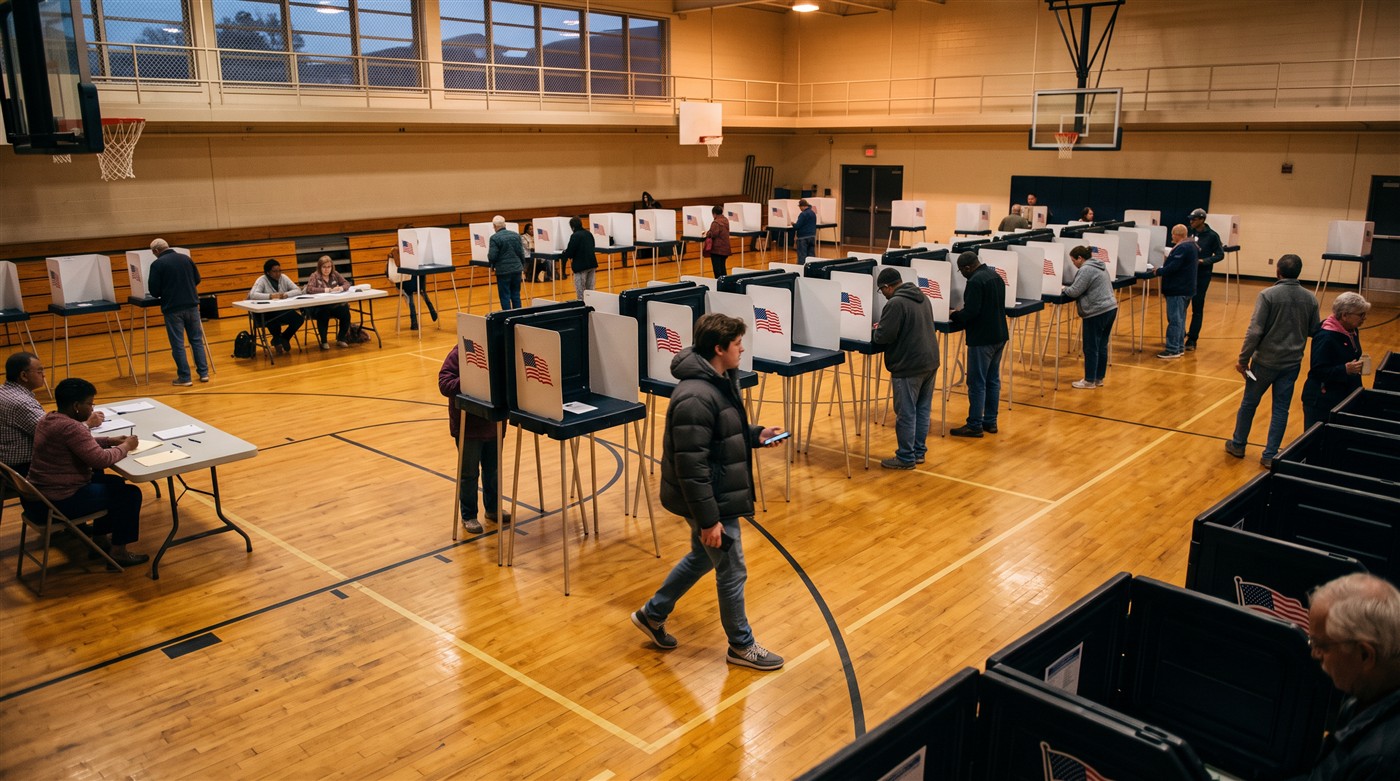
The creator campaign
Campaigns used to treat influencers as an add-on: a celebrity endorsement here, a sponsored post there. In 2026 they became infrastructure. The reason is simple: the audience moved.
Where Americans get political information
Share of each group, from three separate surveys
Those numbers, cited by Reuters, explain the shift. If three-quarters of young adults get political information from feeds, a campaign that only buys TV is talking to someone else. David Karpf, a George Washington University professor who studies digital campaigning, told Reuters that local media "has been pretty much gone for over a decade now", and that influencers are now a main route to voters who have stopped paying attention to traditional news.
Total spending gives a sense of the stakes. AdImpact expected about $12 billion to be spent on the midterms, Digiday reported. Nobody has a reliable figure for how much of that went to creators, because most creator payments don't show up as a separate line in campaign filings.
What campaigns paid creators to do
According to Digiday, political and civic groups booked creators for a wider range of jobs than in 2024:
- Voter registration drives and reminders about early voting and election day
- Ballot measure explainers, where a trusted voice breaks down a complicated question
- Issue campaigns on topics like prices, healthcare and data centers
- Local candidate introductions for House, state and city races, where a regional creator can reach a district far more cheaply than TV
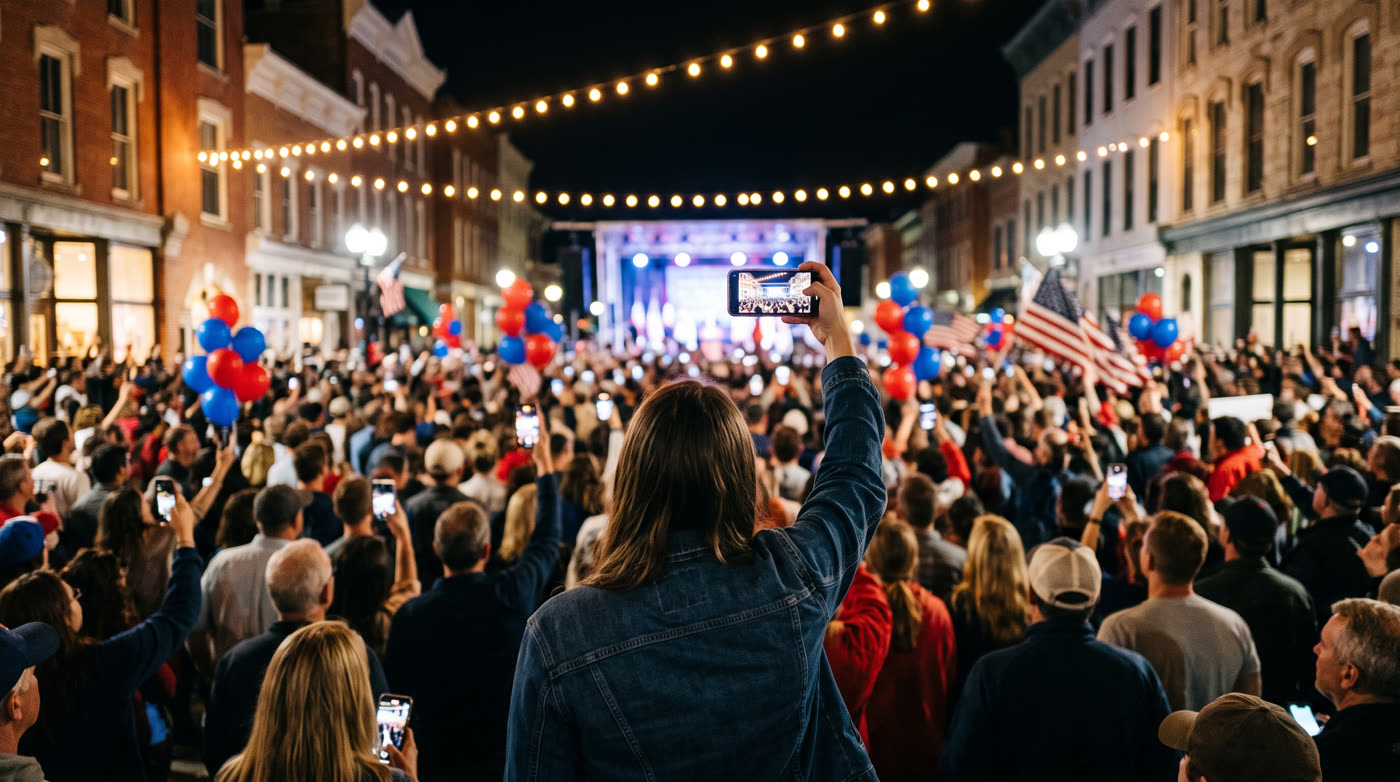
Campaigns also tested "clipping": cutting candidate interviews and speeches into short vertical videos and paying networks of accounts to post them. And they started earlier. Alex Dahan, chief executive of creator marketing firm Open Influence, told Digiday this cycle marked "a move from occasional creator appearances toward sustained relationships." His summary of why it works: "You can buy airtime. You cannot buy the audience's trust."
Creators also broke news
Not all creator influence was paid. Reuters reported that Cheyenne Hunt, a former attorney with more than 500,000 followers across TikTok and Instagram, posted in April about allegations of sexual misconduct against then-Representative Eric Swalwell and helped connect accusers with traditional news investigators. Swalwell denied the claims and resigned. In July, Hunt posted about women making allegations against Graham Platner, a Democratic candidate in Maine, who denied them and left the race, Reuters said. Creators were no longer just amplifying campaign messages. In some cases they were setting the agenda.
The 2026 creator campaign, month by month
- MarchHouse Energy and Commerce Republicans advance the KIDS Act package of child online safety bills on a largely party-line vote.
- AprilCreator Cheyenne Hunt posts about allegations against Rep. Eric Swalwell, who denies them and later resigns.
- JuneThe DNC expands its Influencer and Creative Partnerships program, which has more than 550 members.
- AugustKOSA clears the Senate Commerce Committee. California lawmakers move to fine creators up to $5,000 for undisclosed paid political posts.
- SeptemberRepublicans invite more than 100 creators to their midterm convention in Dallas, with a "Creator Lounge" and special creator credentials.
- October 6Democratic-aligned group People First puts more than 1,000 creators on a call with Pete Buttigieg, Wes Moore and Maura Healey.
- OctoberThe NRSC briefs more than 30 influencers with its chairman, Senator Tim Scott.
- November 3Election day. Democrats win both chambers.
Red vs blue: two creator strategies
The two parties came at creators from different places. Republicans had a head start. Democrats spent the cycle trying to close the gap.
Republicans: the established machine
- More than 100 creators invited to the September convention in Dallas, with a dedicated Creator Lounge
- Special "creator" credentials for interviews, The New York Times reported
- The Trump War Room account, with 2.5 million followers, sends messaging points to creators
- A new media seat in the White House briefing room
- The NRSC briefed more than 30 influencers and worked with podcasters; Senator Ted Cruz runs his own podcast
Democrats: catching up fast
- The DNC creator program grew to more than 550 members
- People First gathered more than 1,000 creators, with over 100 million combined followers, on one call and handed out a "get out the vote kit"
- Candidates hired creator strategists; Senator Jon Ossoff's campaign brought in Parker Short to handle influencer outreach
- Candidates such as Ohio treasurer hopeful Seth Walsh started posting daily videos themselves
Republicans built their advantage in 2024, when Trump went on long-form podcasts such as The Joe Rogan Experience and Andrew Schulz's show and gained ground with young men. In 2026 the party made that a system. CJ Pearson, a 24-year-old Republican consultant who runs an agency working with creators and campaigns, told Reuters: "Democrats are playing catch up." Delanie Bomar, the RNC's deputy communications director, said the White House is "innovative in the way that they do and approach social media."
Democratic strategists largely agreed with that diagnosis. Maria Comstock, a Democratic digital strategist who has done paid work with Senator Ed Markey and unpaid content with Maryland Governor Wes Moore, told Reuters the right was "doing it seamlessly, quickly, cost-effectively" and blamed an "old guard" of consultants for slowing her own side down. Her view of campaigning: "the days of, like, the podium, especially in campaigns, are over."
Democrats did have one advantage: their creators were often louder. Harry Sisson, with 1.6 million Instagram and 2.3 million TikTok followers, built a following mocking Trump. Gabriel Zamora made registration videos with the nonpartisan When We All Vote initiative. Abdul El-Sayed courted creators heavily in Michigan, including streamer Hasan Piker, who spoke at one of his events. That had a cost: Reuters noted Piker's past comments became a campaign liability. It is a reminder that a creator's audience comes with the creator's history.
Did it work?
Honestly, nobody can prove it yet. Ryan Davis, chief executive of People First, told Reuters "It's really hard to track the direct impact." Democrats won big, but they also had a deeply unpopular president, voter anger about prices and a backlash against data centers working for them. Republicans had the stronger creator operation and still lost. What we can say is that both parties now treat creators as essential, and neither will run a campaign without them again.
Paid posts and the disclosure fight
The biggest unresolved problem of the creator midterms is simple: viewers often can't tell when a political post was paid for.
Federal rules haven't caught up. The Federal Election Commission requires paid political ads on social media to say who paid for them, much as TV ads do. But a creator who is paid to post their own video praising a candidate sits in a gray area, and the FEC has not adopted a rule specifically covering paid influencers. Senator Adam Schiff of California introduced federal legislation over the summer, but it has not had a vote, the Associated Press reported.
So the states moved first:
- California has required disclosure since 2023 but struggled to enforce it, because its campaign watchdog had to go to court. A 2026 bill from Assemblymember Marc Berman would let the Fair Political Practices Commission act directly, with fines of up to $5,000 per violation.
- Texas's ethics regulator adopted a rule in 2024 requiring disclaimers on paid political posts by creators.
- Utah and Georgia tried and failed to pass similar bills, the AP reported.
The issue blew up in California's governor's race, where Democrat Tom Steyer, who spent more than $215 million of his own money on an unsuccessful bid, was criticized by rivals for paying content creators, and the state watchdog investigated several cases of creators allegedly not disclosing payments, according to the AP.
Cameron C. Trimble, founder of HUED Collective and a former White House director of digital engagement, told Digiday his firm was spending between $600,000 and $700,000 on creator payments for political campaigns this year, and described some political creator deals as "almost a little more of a pay for play." Kyle Dulay, co-founder of the influencer marketplace Collabstr, said political briefs add "message discipline, tighter approval, and timing tied to the election calendar" compared with brand deals.
The disclosure gap: A brand that pays a creator to praise a protein shake must label it as an ad under FTC rules. A campaign that pays a creator to praise a candidate faces no single federal rule saying the same. That inconsistency is now an obvious target for the new Congress.
Where each party stands on social media law
On social media, the parties agree more than their voters might expect, and disagree in ways that matter a lot to creators. Both want to protect children online. They split over how much power to give regulators, whether federal law should override the states, and what "censorship" means.
| Issue | Democrats | Republicans |
|---|---|---|
| Agree Kids' online safety | Back the Senate's Kids Online Safety Act (KOSA), with a legal "duty of care" making platforms design features with children's safety in mind. | Also back KOSA in the Senate, led by Marsha Blackburn. House Republicans passed a narrower package, the KIDS Act, without the duty of care. |
| Split Overriding state laws | Oppose broad federal preemption. They argue it would wipe out stronger state laws like California's. | Favor one national standard. The House package includes broad preemption, and Trump signed an executive order in December 2025 targeting state AI laws. |
| Split Age verification | Many are skeptical of the App Store Accountability Act. Some called it a giveaway to Meta and want alternatives. | Back age checks run by app stores (Apple and Google) rather than by each app. Meta supports this approach. |
| Split Content moderation | Focus on harms: misinformation, harassment, addictive design and kids' mental health. | Focus on "censorship" of conservatives. The FTC opened an inquiry into platform censorship in 2025, and its chairman has said it may be illegal. |
| Both want change Section 230 | Many want to limit the liability shield for harmful design and algorithmic amplification. | Many want to limit protection for platforms that remove lawful speech. Bipartisan reform bills exist, but none has passed. |
| Split AI and Big Tech | Promise hearings, testimony under oath and scrutiny of data centers. Some call for a pause on new data centers. | Prefer light-touch federal rules to help the AI industry grow, and have tried to stop states passing their own. |
| Split Paid political creator posts | Schiff's federal disclosure bill. California, under Democratic control, is pushing fines. | No national push. Texas, under Republican control, did adopt a disclosure rule in 2024. |
The Democrats: regulate the design, protect the states
Democratic tech policy centers on what platforms do to users, especially children. In the House, Democrats on the Energy and Commerce Committee opposed the Republican kids' package in March. Frank Pallone, the committee's top Democrat, said the bills "simply do not meet the mark for kids safety", Tech Policy Press reported. Their two main objections: the package dropped the duty of care, and its preemption language would override tougher state laws.
Democrats were sharpest on the App Store Accountability Act, which would make Apple and Google verify ages instead of each app. Representative Jake Auchincloss called the session a "Meta markup" and the bill "a false flag operation by Meta", arguing it shifts responsibility away from the platforms that design the feeds.
Democrats also want the federal government to leave room for the states. That matters to creators because states are where the most aggressive laws are being written. California's AB 1709, which Google, Meta and TikTok sued to block this week, would ban algorithmic feeds and autoplay for under-16s.
The Republicans: protect kids, fight "censorship", one national rule
Republicans back child safety too. Senator Marsha Blackburn is KOSA's lead sponsor, and Senate Commerce Chairman Ted Cruz moved the bill through his committee in August, saying it passed "unanimously," CNBC reported. But House Republicans, led by Energy and Commerce Chairman Brett Guthrie, chose a narrower approach with app-store age checks and broad preemption.
The other pillar of Republican tech policy is speech. FTC Chairman Andrew Ferguson launched a public inquiry into platform censorship in February 2025, saying "Big Tech censorship is not just un-American, it is potentially illegal." FCC Chairman Brendan Carr and Ferguson have both argued that Section 230 should not protect platforms when they remove content. Critics, including civil liberties groups, say using regulators to pressure platforms over moderation is itself a threat to free speech.
Republicans have also pushed to stop states regulating AI. Trump signed an executive order in December 2025 setting up a federal task force to challenge state AI laws, with exceptions for child safety. Cruz backed it. Democrats and several Republican governors objected, and legal experts said the order may not be enforceable without an act of Congress.
Where they meet
Some things have passed with both parties' support. The TAKE IT DOWN Act, signed in 2025, made it a federal crime to publish non-consensual intimate images, including AI deepfakes, and requires platforms to remove them quickly. KOSA has 76 Senate cosponsors from both parties. Section 230 reform has supporters on both sides, even if they want it changed for opposite reasons. That overlap is where a divided Washington is most likely to get something done.
What a Democratic Congress will do
Expect investigations first and laws second. Democrats will chair every committee from January, including Senate Commerce and House Energy and Commerce, which control tech legislation, and House Oversight, which runs investigations.
The tone is already clear. Representative Greg Casar said "AI company CEOs should be called to testify under oath." Representative Robert Garcia, the likely Oversight chair, told tech companies to "Lawyer up," CNBC reported. Senator Bernie Sanders and others are calling for a national moratorium on new data centers.
For social media specifically, likely priorities include:
- Hearings on social media addiction and teen harm, with platform executives called to testify
- A new push for KOSA with the duty of care, which the Senate committee already approved
- Federal privacy legislation and stronger FTC oversight, which the IAPP lists as likely Senate Commerce priorities
- Undoing efforts to block state laws, including AI preemption
- Political influencer disclosure, building on Schiff's bill
There is a limit. Trump has said he will veto Democratic legislation, and overriding a veto takes two-thirds of both chambers. In practice, only bills with real Republican support, such as child safety, will become law. Everything else will play out in hearings, subpoenas, the courts and the states.
What it means for creators
- Political work is now a real market, and it will be regulated. If you take campaign money, disclose it clearly every time, even where the law doesn't require it yet. California fines of up to $5,000 per post are a preview, and federal rules are likely to follow.
- Teen audiences are the most exposed. KOSA, state feed bans like AB 1709 and age verification all target under-16s. If your audience skews young, your reach is the most likely to be hit by new rules.
- Expect platform executives in the spotlight. Hearings tend to produce sudden policy changes at YouTube, Meta and TikTok. Watch for changes to recommendations, teen accounts and ad rules in the months after big hearings.
- You are part of the press now, without the protections. Creators sat in briefing rooms and convention lounges this year. They aren't bound by journalism's rules, but they don't get its legal protections either. Check claims before you post them.
What it means for brands and agencies
Brands should keep a clear line between commercial and political work. A creator who ran paid campaign content this year may carry that association into your campaign, so ask about political deals during vetting. Agencies that handle both kinds of briefs should expect disclosure rules for political posts to look more like the FTC's endorsement rules, and should build compliance processes now. And with Washington focused on teen safety and AI, any campaign that targets young audiences or uses AI-generated creators will face closer scrutiny in 2027.
Why it matters: 2026 was the first midterm in which creators were part of the campaign machinery on both sides. The election also handed Congress to the party most eager to regulate the platforms creators rely on. The creator economy helped shape this election, and the next two years of law will shape the creator economy.