Britain has a quarter of Europe's biggest Instagram creators, but brands are buying small
A 2026 Influencity study of 12.4 million creator profiles across 30 European markets finds the UK holds 25% of million-follower accounts on just 14% of the pool, with fashion dominating and Germany and France running thin.
Britain is not Europe's biggest Instagram market by headcount, but it has more of the platform's top tier of creators than anywhere else on the continent. That is the standout finding in a new 2026 study of Instagram creators in 30 European markets by the influencer marketing software company Influencity.
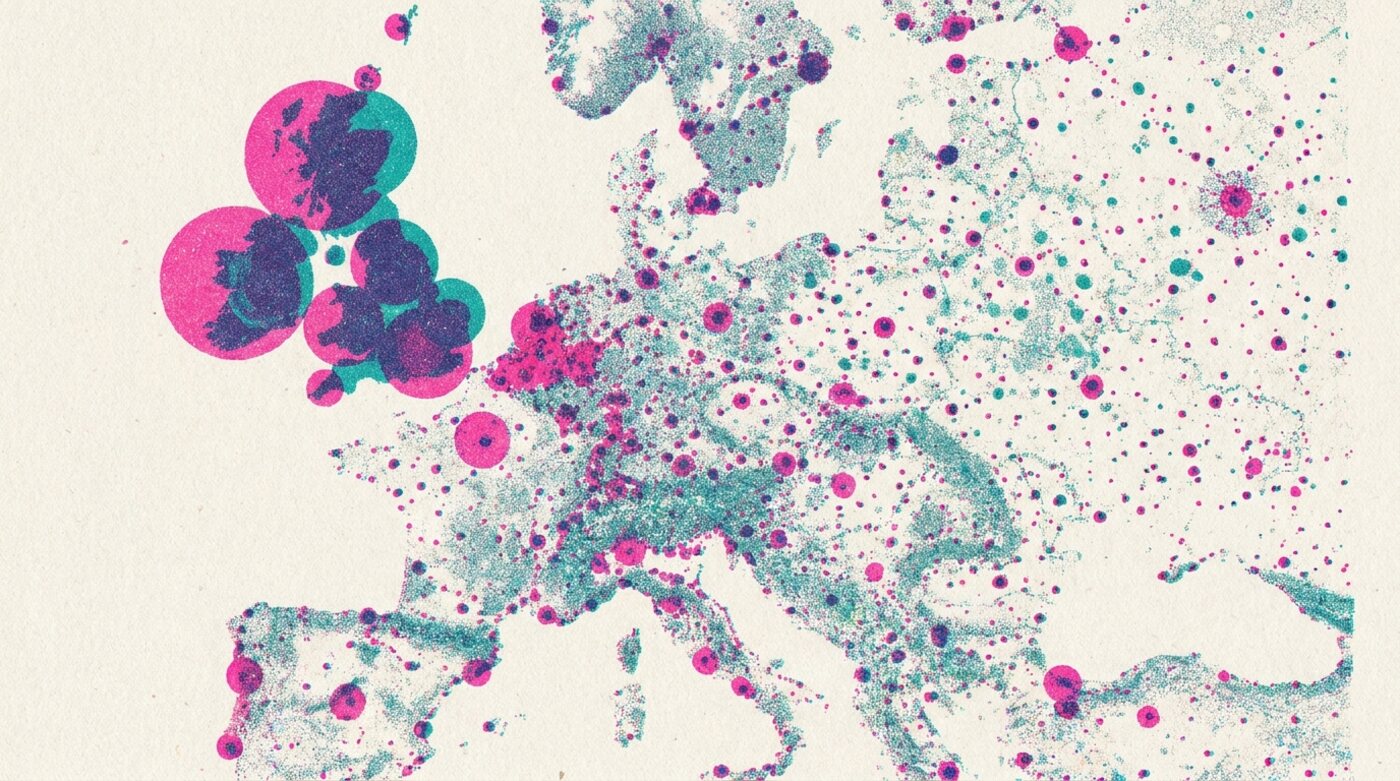
The study counts 12,407,130 "eligible" creator profiles across those markets. The UK accounts for 1,790,398 of them, or 14.4%. But among the accounts with more than a million followers, which Influencity calls the mega tier, the UK holds 2,064 entries. That is about a quarter (25.1%) of the European total and the largest national count in the dataset.
What the study measured
This is a census of creator supply, not a measure of performance. Influencity assigns each profile to a country using public signals such as bio location, geotags, language and content. It counts "entries", not unique people, and it says plainly that the dataset holds no engagement, conversion, fee or return-on-investment data. Its "Europe" is 30 markets, including the UK, Switzerland and Russia, not the EU.
Its main yardstick is density: eligible creator profiles as a share of the estimated Instagram users in each market. Across the region the figure is 4.21%, slightly below the 4.64% Influencity measured in its matching US study. Europe has more creators in absolute terms (38.7% more than the US's 8.94 million), but they are spread more thinly across a larger user base.
Britain: big at the top, and fashion-heavy
The UK's density is 5.04%, well above the regional average and ahead of Germany (3.11%) and France (3.10%). Southern Europe runs higher still: Cyprus leads at 5.57%, just ahead of Italy at 5.54%, and Spain sits at 5.08%. Ireland, at 4.80%, is also above the benchmark.
The UK's real lead is at the top end:
- Mega accounts (1m+ followers): 2,064 UK entries, against 1,427 for Russia, which has a far bigger overall pool.
- 100,000+ followers: 29,222 UK profiles, narrowly ahead of Russia's 29,206.
- 10,000+ followers: 235,182 UK profiles, second only to Russia and well ahead of Italy, Spain, Germany and France.
Fashion dominates. The UK has the deepest fashion pool in the study, with 812,369 profiles tagged to the niche, or 45.4% of its eligible accounts. Fashion is the top niche in all six of Europe's largest markets, followed by food and travel, where Italy has the most supply.
Influencity attaches a caveat that matters for brands: a mega creator assigned to the UK "may have a substantial international following". English-language creators based in Britain often speak to audiences in the US, Ireland, Australia and beyond, so a British mega account is not the same as a British mega audience.
The rest of Europe is overwhelmingly small
Across all 30 markets, 87.3% of entries are nano creators, 11.4% are micro and just 1.3% are macro or mega. The big accounts are also more concentrated than the creator pool as a whole. Russia, the UK, Italy, Spain, Germany and France hold 76.7% of eligible profiles but 86.9% of mega entries.
Two of those six markets come with warnings. Russia has the single largest pool, 2.88 million profiles, but Influencity says it "cannot be treated as commercially accessible": Instagram has been blocked there since 2022, and advertising on the platform has been barred since September 2025. France has the lowest density of the big six but the highest share of profiles above 10,000 followers (17.0%) of all 30 markets, which points to a smaller but more established creator base.
Gender splits shift with size. Of profiles with a gender classification, 59.8% are female across the region. In the mega tier, 55.5% of classified entries are male. In the UK, the classified mega tier is 853 male and 643 female, with 568 entries unclassified, so the picture at the top is incomplete.
The study also includes a regional TikTok summary of about 21.4 million eligible profiles, implying a creator density roughly double Instagram's. Influencity notes that this figure has not yet been checked against matching country-level TikTok data.
Supply at the top, demand at the bottom
The interesting tension is between where Britain's supply sits and where British brands spend. In Kolsquare's 2025 research for UK marketers, 93% of UK brands said they worked with micro-influencers and 66% with macro creators. Instagram (92%) and TikTok (80%) were the main platforms. A third of UK marketers (33%) named rising costs and unclear pricing as concerns.
Put those together and the UK market looks two-speed. Brands are buying small creators at scale, while the country also produces an unusually large group of very big accounts that can sell to audiences well beyond Britain. Those top creators are competing for budgets with a deep, cheaper middle tier, and they increasingly have options outside UK brand deals altogether. For more on what different tiers charge, see our guide to how much brands pay influencers in 2026.
What it means for creators
If you are a UK creator in fashion, you are in the most crowded niche in the most crowded top tier in Europe. Specialising helps: food, travel and tech pools are thinner in Britain than fashion. Know where your audience actually lives. A large share outside the UK is a selling point for international brands, but a weakness in a pitch to a UK-only retailer.
What it means for brands and agencies
Treat follower counts by country with caution. Ask for audience geography, not creator location, before paying a UK rate for a mega account. Germany and France have fewer creators per Instagram user, so the right partners may be scarcer and better established there. Italy and Spain have deep nano pools that suit broad seeding programmes. And Russia's large numbers are not a usable market.
Why it matters: Europe's creator supply is uneven. Britain has an outsized share of the continent's biggest Instagram accounts, while most of Europe's creators are small. For brands, the useful question is no longer how many creators a market has, but which tier, which niche and whose audience.