China's Singles' Day now runs on livestream hosts. This year they are verified, trained and liable
Two days before November 11, the world's biggest shopping festival depends more than ever on livestream hosts, from Li Jiaqi selling AI subscriptions to Korean actors on Kuaishou. It is also the first Singles' Day under Beijing's new livestream e-commerce rules. Here is what changed, and what creators and brands elsewhere can learn from it.
On November 2, China's best-known livestream seller sold something you cannot hold. Li Jiaqi, the host still nicknamed the "lipstick king", sold about 100,000 monthly memberships of QwenWork, Alibaba's AI office assistant, in roughly 30 minutes, China Daily reported. The regular price is 28 yuan (about $4.20) a month; in Li's stream it was 0.01 yuan.
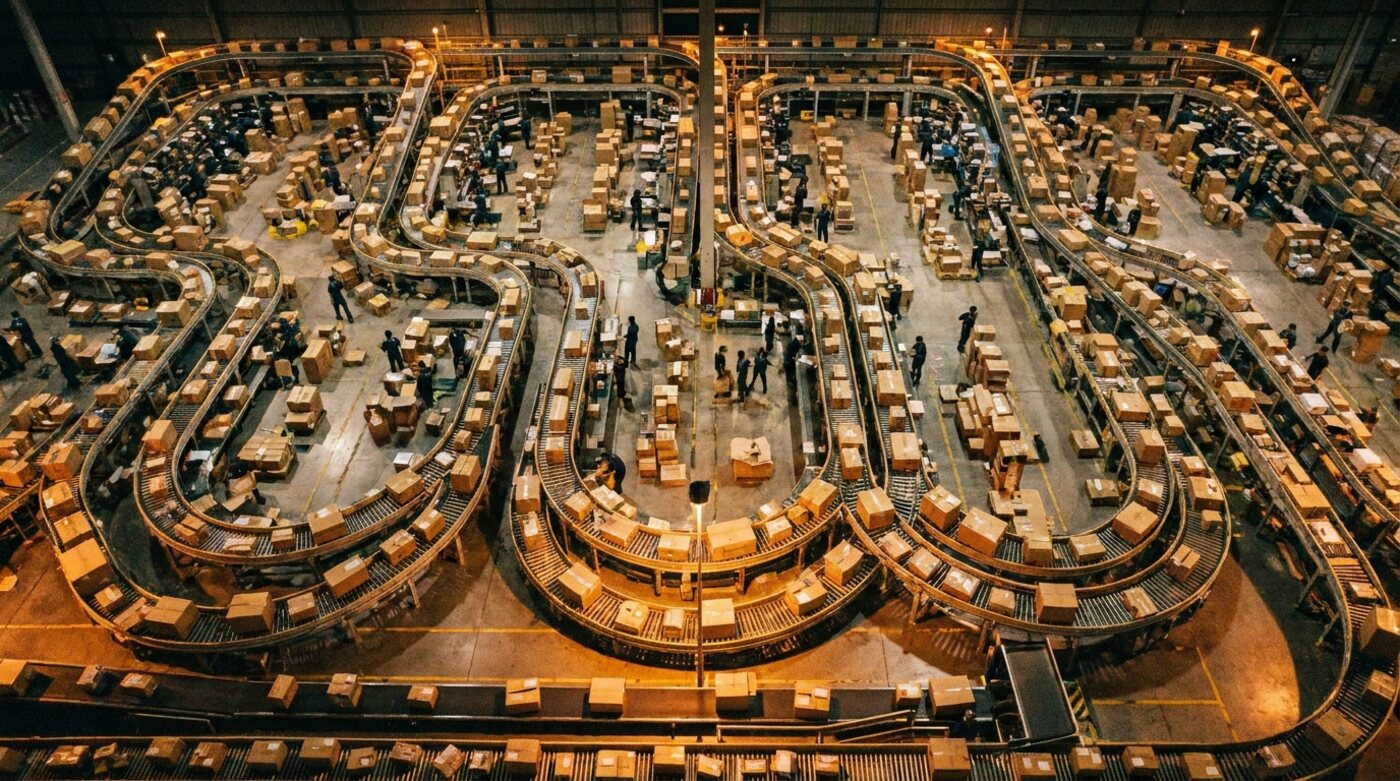
The stunt was a sign of where Singles' Day stands in its 18th year. The November 11 festival, which Alibaba started in 2009, is still the world's largest shopping event. But it now lasts more than a month, spans half a dozen platforms, and much of the selling is done by livestream hosts. It is also the first Singles' Day held under Beijing's new rules for livestream e-commerce, which treat hosts, the agencies behind them and the brands that hire them as regulated businesses.
A festival that never ends
The 2026 festival started in early October. According to CNA, Kuaishou began its campaign on October 7, Xiaohongshu on October 10, JD.com on October 12, and Alibaba and Douyin on October 15. The Asia Business Daily reported that WeChat's in-app store, Weixin Xiaodian, has joined for the first time, with a 35-day campaign running until November 15.
The data company Syntun put total sales across platforms during last year's festival at 1.695 trillion yuan, up 14.2% on the year before. CNA noted that was about half the previous year's growth rate. "More modest growth rates should be read as normal as China's consumer market matures," Jacob Cooke, chief executive of the agency WPIC Marketing + Technologies, told CNA.
Under those totals, the shift to livestreaming is clear. A white paper published in February by a research centre under the State Administration for Market Regulation (SAMR) and the Chinese Academy of Social Sciences found that livestream e-commerce sales passed 5 trillion yuan in 2025, close to a third of all online retail in China, the Asia Business Daily and China Briefing both reported. It counted 660 million livestream shoppers.
Who is selling this year
The biggest names are still performing. Li's QwenWork stream was part of a wider push by Tmall and JD.com to sell AI "tokens", the usage credits for chatbots and AI models, as an everyday consumer product. Tmall said token-category sales rose 450% on the first day of its festival, according to China Daily. Zhang Yi, chief analyst at iiMedia Research, told the paper the stream was "an effort to introduce the token economy to mainstream consumers". Cui Lili of the Shanghai University of Finance and Economics was more cautious. She told China Daily that some buyers may have been drawn by the price rather than any real need for AI.
Foreign celebrities are joining in too. On October 18 in Hangzhou, the Korean actress Lee Dahae appeared as a guest on a Singles' Day broadcast with a Kuaishou sales host. The two-hour show sold 100 million yuan of goods, according to the event's sales board, the Asia Business Daily reported. Lee said the job has one firm requirement: "You have to speak Chinese, and foreign languages are absolutely not allowed."
The economics are getting harder
The rest of the market is less glamorous. Fang Jun, a Shanghai host who streams four to five hours a day, told CNA that on a normal day she might spend 1 million yuan on advertising to make 2 million yuan in sales. Shoppers now prefer items priced around 40 to 90 yuan to 300-yuan gift sets, she said. Her rule: "Good hosts sell themselves first."
Platforms say shoppers are tired of the pressure. Liu Manting, a brand marketing manager at Taobao Fashion, told CNA that customers are weary of hard-sell livestreams and now buy what they need. CNA reported that Alibaba has replaced its complicated cross-store coupons with flat 15% discounts.
The rules that now apply
The biggest change this year is legal. The Measures for the Supervision and Administration of Livestream E-commerce, issued jointly by SAMR and the Cyberspace Administration of China as SAMR Order No. 117 on December 18, 2025, took effect on February 1, 2026. The text, published by SAMR, gives each party in a livestream its own duties.
- Hosts must be verified and trained. The operator of a livestream room must check a host's identity before the host goes live, and platforms must keep checking. Platforms must train new hosts before their first stream and all hosts every year, and hosts may not skip or cheat the training (Articles 8 and 10).
- Endorsements count as advertising. When someone with "a certain level of influence" who is not the seller recommends a product in their own name, or when stream clips are edited and reposted to promote a product, the content is commercial advertising under China's Advertising Law (Article 35). China Briefing notes that the measures do not define "a certain level of influence", so most professional hosts and large creators should assume they are covered.
- No fake claims, including by AI. Hosts may not make false or misleading claims about a product's origin, performance, sales or reviews, or use AI to invent them (Article 34). AI-generated people in a stream must be labelled continuously, and the operator using them is liable (Article 37).
- Agencies are in scope. Agencies that manage hosts, known in China as MCNs, must vet and train their hosts, sign written contracts with them, check the suppliers of the products they choose, keep records for at least three years and never arrange fake orders or reviews (Articles 38 to 45).
The fines set by the measures themselves are modest: generally 10,000 to 100,000 yuan for platforms, operators and agencies that fail to fix problems or commit serious breaches. False advertising by hosts is punished under the Advertising Law and the Anti-Unfair Competition Law instead.
Health products are the pressure point
Regulators have made clear where they will look first. In April, SAMR began a six-month campaign against false and misleading online sales of food and health supplements, and it explicitly covers livestream operators and hosts, according to the law firm Keller and Heckman. In June, SAMR published draft rules on advertising for medicines, medical devices and health foods. NutraIngredients reported that the draft would bar celebrity endorsements in livestream sales of these products, ban disguising promotions as wellness advice, and stop platforms selling paid traffic boosts for such streams. Those rules were still a draft at the time of that report, and we could not confirm whether they have been finalised. Platforms are also acting on their own: NutraIngredients reported that a three-month Douyin campaign removed or penalised about 43,000 influencers and 793 sellers over exaggerated or fake weight-loss claims.
What it means for creators
China shows where live shopping ends up as it matures. Selling becomes a profession with paperwork: identity checks, annual training, contracts and records that last longer than the stream. For creators in markets where TikTok Shop and YouTube Shopping are growing, the lesson is that regulators will treat a host as an advertiser, not as a fan with an opinion, and edited clips of a stream count as ads as well as the live broadcast.
The economics are a warning too. If a host like Fang Jun needs 1 million yuan of paid traffic to make 2 million yuan of sales, much of a live seller's margin goes to the platform. Creators who build trust and a loyal audience, rather than relying only on discounts, are the ones still growing.
What it means for brands and agencies
The new rules put responsibility on everyone in the chain, so brands can no longer leave compliance to the host. That means approving claims before a stream, briefing hosts on what they may and may not say, and labelling any AI presenter. Agencies now have legal duties of their own. Western brands selling in China through livestreams should check that their agency partners can show training and verification records.
Why it matters: Singles' Day is now largely a livestream event, and China is the first big market to regulate every link in the chain, from platforms and agencies to hosts and AI presenters. As live shopping grows in the US, Britain, Europe and Southeast Asia, it is the clearest preview of the rules that creators and brands elsewhere are likely to face.