Europe rewrites its TV law by December, and creators could end up competing with broadcasters for the feed
The EU must publish its review of the Audiovisual Media Services Directive by 19 December. Regulators want creators brought inside the rules, broadcasters want guaranteed visibility, and YouTube has surveyed 20,000 creators to push back.
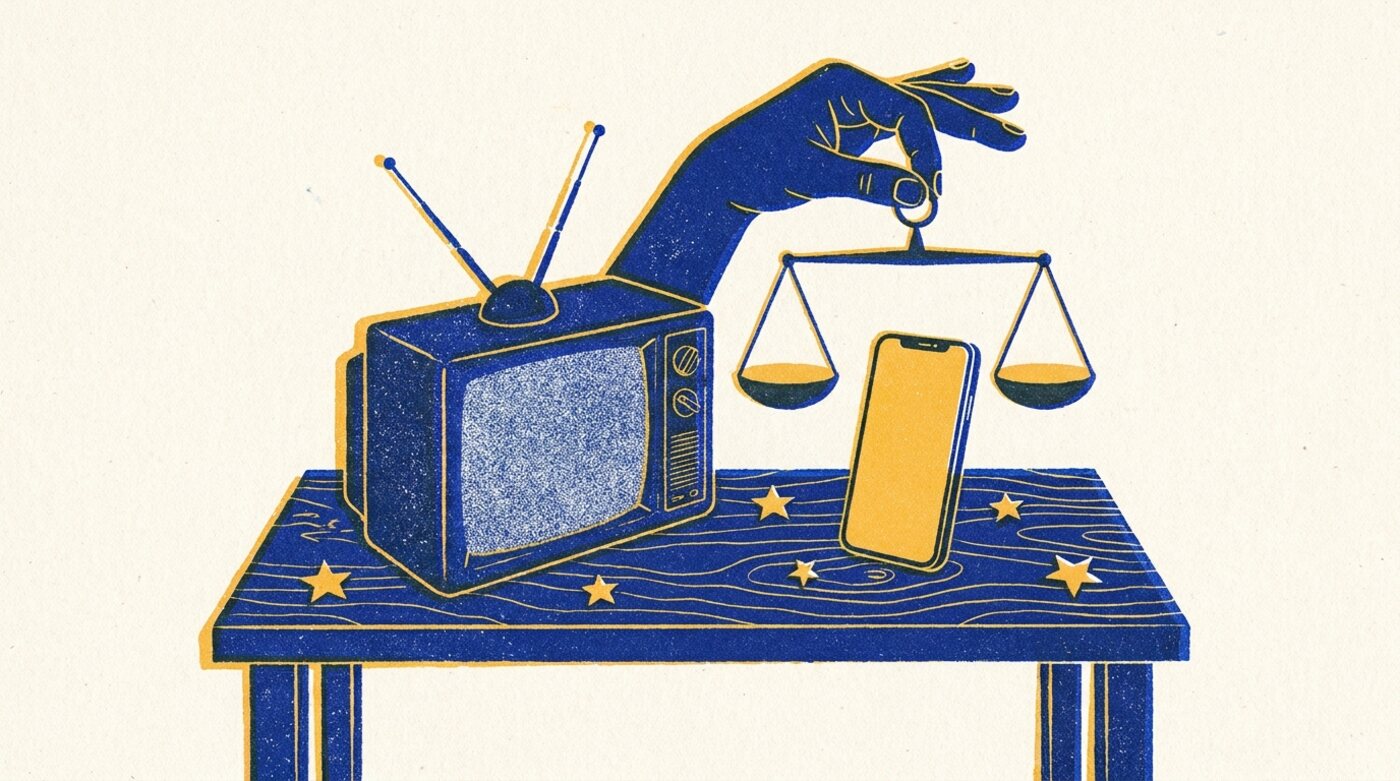
Europe's main media law was written for television. By 19 December, the European Commission is legally due to say whether it should now cover creators too. That deadline sits in Article 33 of the Audiovisual Media Services Directive, which requires an evaluation report "accompanied where appropriate" by proposals to change the law. Tech Commissioner Henna Virkkunen has said both will come. "By December 2026, we will present an evaluation report and the proposal for review," she told MEPs on the European Parliament's culture committee last year, according to EU Perspectives.
The fight over what that proposal says has been running all year. Regulators want creators brought inside the rulebook. Broadcasters and authors want their work pushed up the feed. YouTube has commissioned a survey of more than 20,000 EU creators to argue the opposite. Here is where the main players stand, and what is at stake for creators and the brands that pay them.
What the directive does now
The directive sets the EU's basic rules for TV and streaming: advertising limits, protection of minors, and quotas and visibility for European works. A 2018 revision extended some of those rules to video-sharing platforms and social media, including obligations on commercial communications. It also added Article 7a, which lets member states, if they choose, make sure "services of general interest", in practice mostly public and national broadcasters, get appropriate prominence.
What it does not do is name creators. The text never defines an influencer. The Commission's own position is that the directive already applies to an influencer whose activity meets the definition of an audiovisual media service. That leaves 27 national regulators to decide where the line falls, which is part of why countries such as France and Belgium have written their own influencer laws (see our report on Europe's patchwork of influencer rules).
In its call for evidence, the Commission set out three paths, as summarised by the law firm Covington: leave the directive unchanged, make targeted adjustments "for instance with respect to influencers, rules on prominence, advertising and the protection of minors", or turn it into a wider EU content regulation. A public consultation ran from 10 February to 1 May 2026.
The regulators: bring creators in
The clearest signal came from the European Board for Media Services, the body that brings together national media regulators. In submissions published on 30 July, it asked the Commission to include "content creators, emerging services and user interfaces" in the directive's scope, based on "editorial responsibility, transparency and consumer protection".
The Board also wants advertising obligations extended to video-sharing platforms and on-demand services. It wants stronger protection against harmful commercial communications on "financial scams, food supplements, surgical and aesthetic procedures", and it wants restrictions on alcohol advertising extended. Those are among the categories brands most often buy from creators.
On prominence, the Board wants "stronger EU-level harmonisation" and better visibility for general-interest media "including in recommender systems and emerging AI-driven interfaces". It would keep Article 7a optional for member states.
The authors and broadcasters: guaranteed visibility
The Society of Audiovisual Authors, which represents writers and directors, goes further. In its 1 May consultation response it said "availability is not enough" and called for "specific, mandatory measures" to secure the prominence and discoverability of European works.
The same response makes a point creators may welcome. Professional creators on video platforms "are considered authors in many EU countries", the Society argued, so any new definition of influencers should "avoid any negative side effects on content creators who are authors". In other words, a creator could be both an advertiser to be regulated and an author with rights. The Society wants the law to recognise both.
Not every industry group wants more prominence rules. Connect Europe, which represents telecoms operators, said in its response that national prominence rules have already produced "an overload of highlighted services", with about 80 TV channels required to be featured prominently in one country, and asked for EU-level guardrails on how prominence fits with "user autonomy".
YouTube: don't touch the algorithm
YouTube's answer arrived on 12 October with "Creative Capital", a report based on a survey by the research consultancy Public First. It drew 20,617 completed responses from creators in all 27 member states between 1 June and 8 July, plus 20 interviews.
Most of the report is a case for treating creators as a creative industry. According to the report, 64% of respondents said more recognition from government would help them feel part of the EU creative sector, 63% said they get little or no support dealing with government, and 65% said they get too little or no help accessing public funds or grants. It proposes a statistical classification for digital creators, creator apprenticeships, and opening Creative Europe's MEDIA programme to digital-native productions. YouTube cites Oxford Economics research putting its creative ecosystem's contribution to EU GDP at more than €8.4 billion in 2025.
The fifth recommendation is the one aimed at December. Of the respondents, 83% said YouTube's recommendation algorithms are important to their growth and revenue. Among creators with more than 100,000 subscribers or followers, 71% said reduced visibility would hit their income. David Wheeldon, YouTube's EMEA head of government affairs, wrote that "rigid prominence mandates would force platforms to give special treatment to a small group of organisations."
The survey was commissioned by a platform with a direct commercial interest in the outcome. Its numbers show what creators fear, not what the Commission will propose. But the fear is reasonable. In a feed with fixed space, any slot reserved for a broadcaster is one less slot for a creator.
What it means for creators
Three outcomes are realistic. One: creators are written into the directive's scope, probably with tests based on audience size, regular publishing and commercial intent, which would bring TV-style ad, sponsorship and child-protection rules to larger channels. Two: prominence moves from TV menus into recommender systems, which would directly affect discovery on YouTube and TikTok. Three: the Commission delays or splits the work, because the Digital Fairness Act, expected this week, already covers influencer marketing (see our explainer).
The recognition agenda is not only a YouTube talking point. France already gives creators public money through the CNC, as we reported. If Brussels writes creators into media law, it will be harder to keep them out of media funding.
What it means for brands and agencies
If the Board's advertising proposals survive, campaigns for supplements, cosmetic procedures, alcohol and financial products would face tighter rules on video platforms across the EU, not just in the countries that have acted alone. Agencies running pan-European creator campaigns should check those categories now. The Commission's proposal would then go to the Parliament and member states, so any new rules are likely to be years away rather than months, but the direction will be set in December.
Why it matters: For the first time, the EU is deciding whether creators are part of the media system or simply content on platforms. Regulators want creators inside the rules. Broadcasters and authors want guaranteed visibility. YouTube wants the algorithm left alone. The December proposal will show whose argument won.