Sway Me Good puts influencer marketing on the side of London's red buses
The UK influencer platform is advertising on double-deckers through central London, a rare move into mass-market outdoor ads for a company that sells to marketing teams.
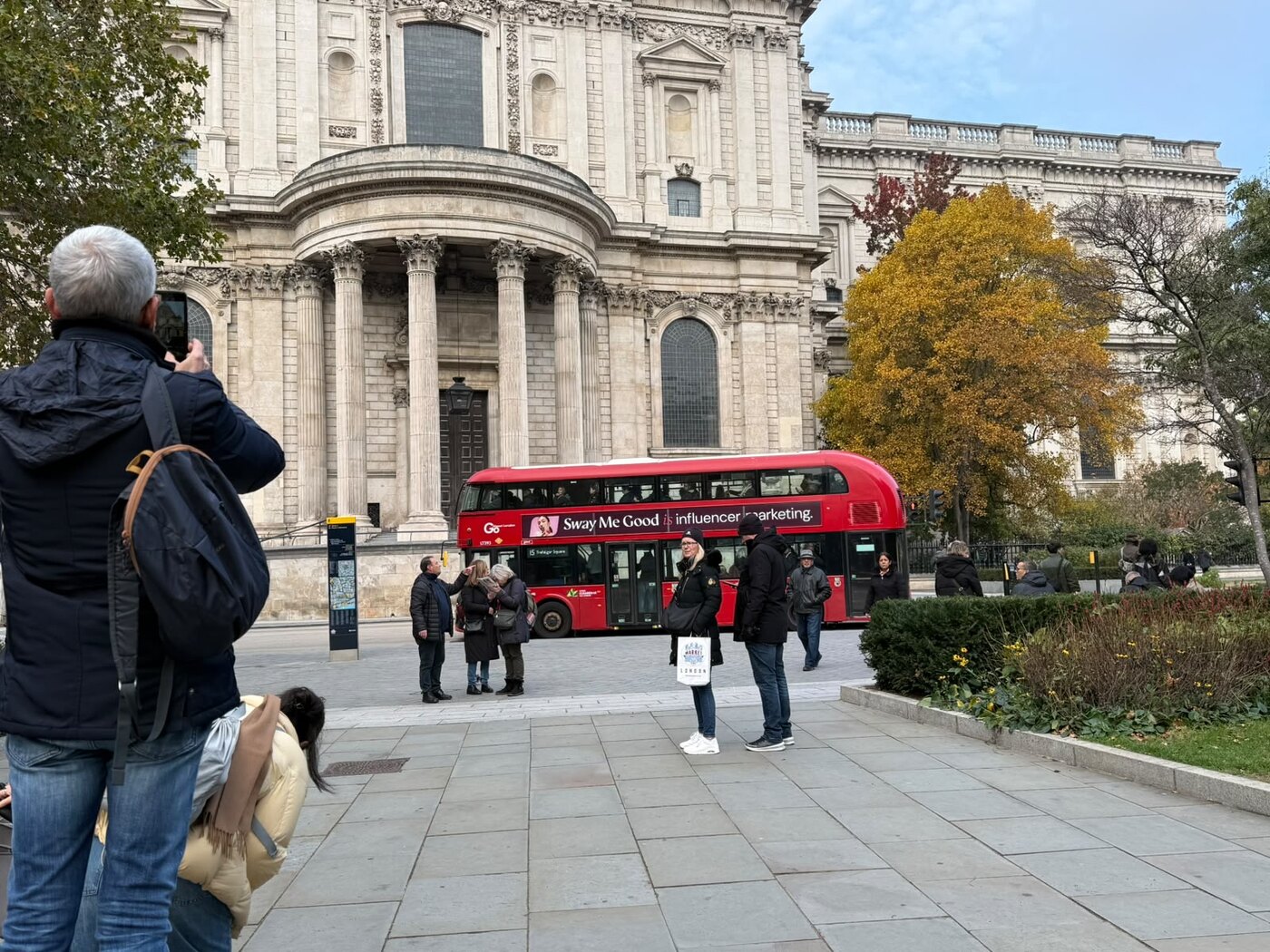
The Collab Report has spotted London's red double-decker buses carrying something unusual for an influencer company: the line "Sway Me Good is influencer marketing." The ads are running on buses across the city.
It's a long banner along the side of the upper deck, the format the industry calls a "superside", showing a creator's face beside the brand name. That's the kind of placement usually bought by airlines, streaming services and supermarkets, not by software companies that sell to marketing teams.
Who is Sway Me Good?
Sway Me Good is a UK influencer marketing platform. Its own website says the business began in 2019, after its founder saw "first-hand how fragmented influencer marketing could be" while running a campaign for a food brand.
The company is not a traditional agency that runs campaigns for clients. It sells software. Brands and agencies post paid, gifting and affiliate opportunities, and creators apply. The company's agency page claims a network of more than 20,000 vetted creators and an AI matching tool it calls SwayMatch. Those figures come from the company and have not been independently verified.
Chief executive James Eid launched the marketplace at the PI LIVE Europe trade show in London in October 2023. He told Hello Partner at the time that the platform "can cut the amount of time that brands are spending on starting up campaigns by 50%." The company's CreatorFest partner listing names Pinterest, Diageo, Shopify, TikTok and Edelman among the brands it says it has worked with.
Why a B2B platform is buying bus sides
Most influencer platforms find customers through LinkedIn, trade shows and search ads. A bus is a blunt tool by comparison: it reaches everyone, and almost none of them buy influencer software.
But the line on the bus is doing a specific job. "Sway Me Good is influencer marketing" is a claim to own the category, not a product pitch. For a company competing with dozens of similar platforms, being the name a marketing manager already recognises can matter when shortlists are drawn up. London's buses also run past the offices and agencies where those decisions get made.
Outdoor advertising has another quiet advantage for companies in this space: it gets photographed. A red bus carrying a brand through London is exactly the sort of picture that ends up on social media.
What we don't know yet
Sway Me Good had not announced the campaign publicly at the time of publication, and The Collab Report could not confirm how many buses carry the ad, which routes they run, how long the campaign lasts, or who planned and bought the media. We will update this story if the company shares those details.
What it means for creators
Platforms spending on mass-market advertising usually want growth on both sides of their marketplace. If the campaign brings in more brands, creators on the platform could see more paid and gifting briefs. As with any platform, check how and when you get paid before you sign up.
What it means for brands and agencies
Brand awareness is not the same as results. If you're comparing influencer platforms, ask each one for real case studies, the size of its active creator network, and how it vets fake followers, whatever its marketing says.
Why it matters: Influencer marketing companies have mostly sold themselves online. Seeing one on the side of a London bus suggests the category is maturing into something that buys mass-market brand advertising, just like the brands it serves.