Britain is copying Australia's teen social media ban. Australia's own regulator says it isn't working
Three months into Australia's ban on under-16s, its regulator found more than eight in 10 were still on social media. Britain should build its rules around safer platform design, not account bans, and creators should say so.
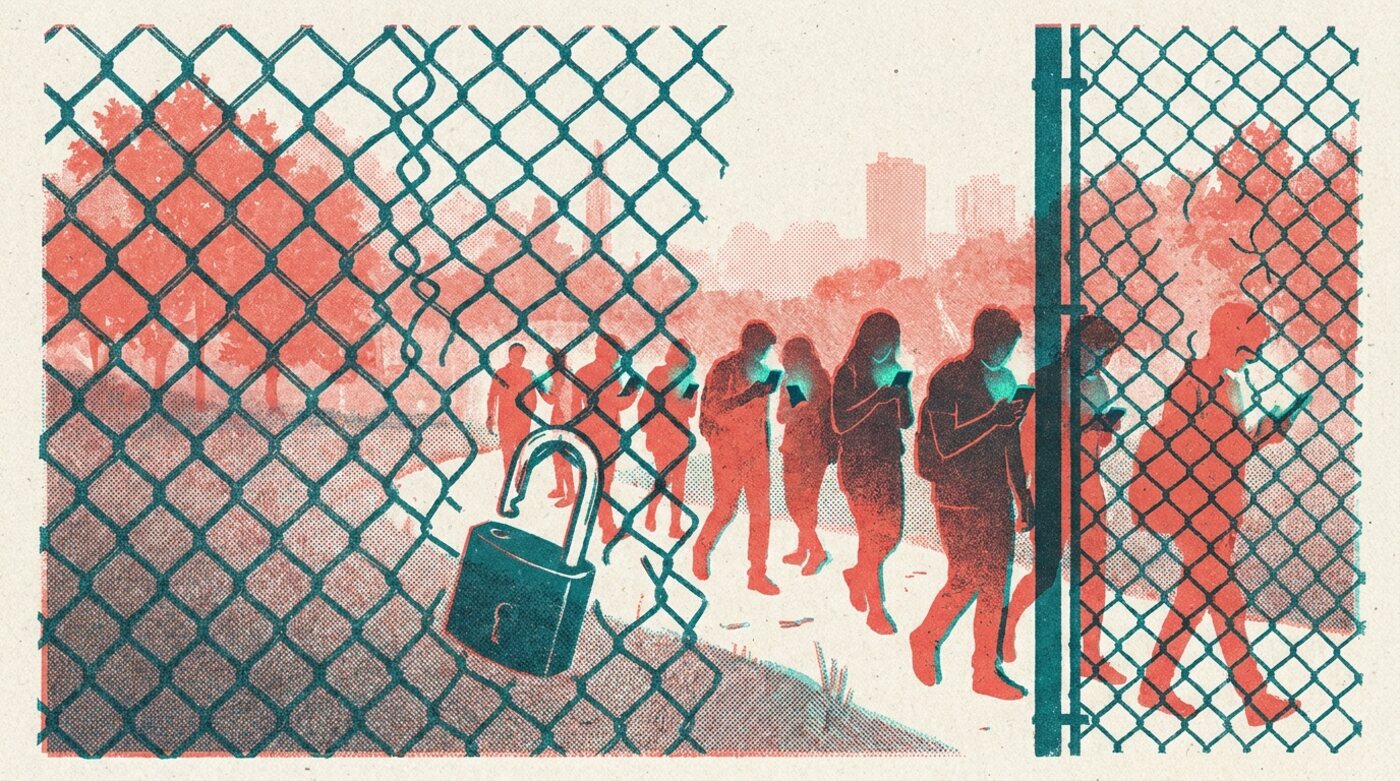
Britain is about to copy Australia's ban on social media accounts for under-16s. It should first read the evaluation Australia's own regulator published in August. Three months after the ban began, eSafety found, more than eight in 10 Australian under-16s were still using social media.
That is not a teething problem. It is the result you get from a policy built on taking accounts away from children. Britain has a better idea in the same document, and it is the one ministers should lead with.
What Australia actually got
The ban took effect on December 10, 2025. By January the government said about 4.7 million accounts belonging to Australian children had been removed or restricted. Ministers treated that number as proof of success. Communications minister Anika Wells said Australia had "stared down everybody who said it couldn't be done", Al Jazeera reported.
The eSafety evaluation, published on August 1, tells a different story. According to Al Jazeera's reading of it, nearly 86% of the children surveyed used at least one age-restricted platform before the ban. Three months after it started, the figure was still above 81%. Daily use barely moved, from about 60% to about 58%. Time spent on sport, music, friends and family showed little change. About half of the children who kept accounts said the platforms had never checked their age.
The regulator blamed the platforms for failing to put in effective age checks. That is fair, but it is also the point. The whole policy depends on age checks. Writing in The Conversation in June, Lisa Given of RMIT University noted that age-estimation tools can be wrong by one to three years. Teenagers have beaten checks using older siblings and parents. Others moved to apps outside the ban, such as Lemon8, Yope and Rednote, or simply watch logged out, which the law still allows. Even assistant minister Andrew Leigh admitted in August: "We never expected that this would have 100 percent compliance."
Britain is copying the wrong half
On June 15, Keir Starmer announced that social media companies would no longer be able to offer their services to under-16s. The government's July response to its "Growing up in the online world" consultation says the rules should take effect in spring 2027, with Ofcom enforcing them. We have already argued that the plan leaves child stars of family channels exposed.
The bigger problem is the model itself. A ban on accounts is easy to announce and easy to count. It is also the part that leaks. A logged-out teenager, or one on an unregulated app, gets no safety settings at all. That is a point even Reddit has made in its High Court challenge to Australia's law.
The better idea is in the same government response. For 16- and 17-year-olds, Britain plans on-by-default protections: no access between midnight and 6am, overnight notifications muted, and autoplay and personalised feeds, including in-feed ads, switched off. Those rules go after the design features that critics actually object to. They also work whether or not the platform has guessed a user's age to the exact year.
Britain should make those defaults the core of the policy for every under-18, and judge platforms on whether they deliver them. A total ban could stay as a fallback for services that refuse.
Why creators should say so out loud
Creators have mostly kept quiet, worried that defending teenage audiences looks like defending their own view counts. That silence is a mistake. Australia shows the cost is real and lands on ordinary creators, not just big platforms. Reuters reported in the ban's first week that the comedy creator Josh Partington's first post drew under 10,000 views, against a usual 100,000 or so. The 18-year-old musician Harry Kirby lost about 1,000 Instagram followers, a "good part" of his audience being under 16. "They just vanished," he said.
Those creators accepted the loss as the price of child safety. The trouble is that, on eSafety's own numbers, most of the children did not vanish. They became harder to see, harder to protect and harder for brands to reach responsibly. Teenagers on fringe apps and logged-out feeds are outside the advertising labels, age-targeting rules and reporting tools that regulators have spent years building.
What it means for creators and brands
Denmark is moving on an under-15 ban, and Greece has proposed one from January 2027, subject to its parliament. With Britain too, this is becoming the European default, and creators with young audiences should plan for it. But the UK rules are still being written. The regulations have not yet gone before Parliament, and Ofcom is still preparing to enforce them. Creators, agencies and brands that work with young audiences have a few months to argue for safety-by-design rules that would actually protect teenagers. Our advice is to use them.
Why it matters: Australia's ban removed millions of accounts but, on the regulator's own figures, left most children online with fewer protections. Britain can still choose rules that change how platforms are built instead of rules that only change who has a login.
This is the view of The Collab Report's editorial board. Disagree? Tell us, and we may publish the best responses.