Australia will make Meta, Google and TikTok pay for news. News creators may get little of it
The News Bargaining Incentive charges big platforms 2.75% of Australian ad revenue unless they sign deals with news businesses. Meta says users come for creator content. The law is built around newsrooms, and it barely mentions creators.

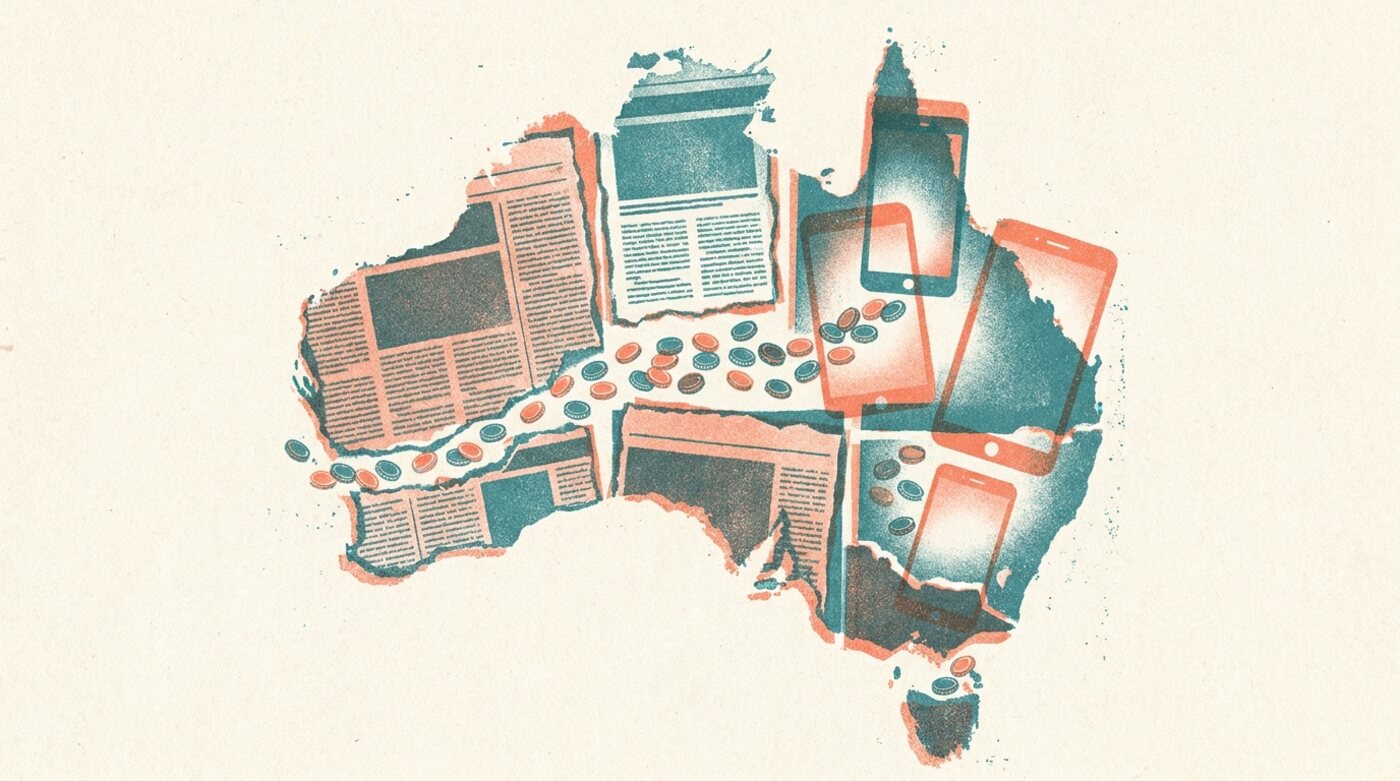
Australia has a new law that makes the biggest digital platforms pay for news, one way or another. Meta's main argument against it is that people come to its apps for creator content, not news. The people who now make much of the news Australians watch on those apps are creators, and the law says almost nothing about them.
The News Bargaining Incentive passed federal parliament in August. KPMG, in a note to clients, gives its date of enactment as 26 August 2026. It applies from the 2025-26 financial year. Here is how it works, who gets the money, and what it means for creators and brands.
How the charge works
The law covers large social media and search services. According to KPMG, a social media service counts if it averaged more than 5 million monthly active Australian users in the previous financial year, and a search service if it had more than 10 million. The company's group must also earn more than A$250 million a year in Australian digital advertising revenue. Stand-alone AI chatbots that do not run an internet search are left out.
A platform that meets the test owes a charge of 2.75% of its Australian digital ad revenue. The figure is based on revenue from two financial years earlier, so the 2026-27 charge is worked out from 2024-25. The draft published in June set the rate at 2.25%. The government later narrowed the revenue it applies to and raised the rate.
The point, ministers say, is not to collect the charge at all. "We want digital platforms to do deals with a diverse range of media organisations," Assistant Treasurer Daniel Mulino said when the final version was announced in August.
How platforms can cut the bill
A platform can reduce what it owes by paying Australian news businesses for their journalism. KPMG's summary of the law sets out the rules:
- A platform must make new deals with at least eight different news groups before any of the money counts.
- Each dollar paid to a small or medium news business, broadly one with turnover under A$50 million, cuts the bill by A$2. Each dollar paid to a larger one cuts it by A$1.50.
- No single news group can account for more than 25% of a platform's charge.
- Advertising or marketing given as part of a deal counts for no more than 40% of that deal's value.
Any charge that is still owed goes to the news industry. The government says all of the money raised will be given to news media "to support journalism in Australia". The ABC reported in June that it would be shared according to the number of journalists each organisation employs.
The final law made some changes that matter to smaller outlets. The government's August release doubled the extra weighting for regional, small and medium, and community publishers from 10% to 20%. It created grants for small publishers and start-ups with annual revenue under A$150,000. It also widened the definition of a journalist to include freelancers who produce core news content.
The platforms' case
When the draft was published in June, the ABC reported that Meta, Google and TikTok had been singled out for their Australian revenue and large local user numbers. Meta's response was blunt. It called the scheme "a retroactive tax on a handful of foreign companies" and said: "It is a tax on innovation dressed up as media policy."
Meta's main argument is about what its users want. "People come to our platforms for connection, entertainment, and creator content, not to click on news articles," it wrote. It said daily use of Facebook News in Australia had already fallen by more than 80% before it closed the service in April 2024. It also pointed to video: it says Reels gets 140 billion views a day and video is over 60% of time spent on Facebook and Instagram.
Google, which has signed many news deals, has also criticised the plan. It told the ABC it has commercial agreements with more than 90 news businesses and 226 outlets in Australia. In the sources we reviewed, we found no public statement from TikTok on the scheme.
Where creators fit
Meta is right that people use its apps for creator content. But that content now includes a lot of news. In Australia, news creators have built large audiences explaining politics, the economy and world events on TikTok, Instagram and YouTube. Today's lead story looks at how the law in Australia, Britain and Europe still treats many of them as influencers rather than journalists.
The new law is built around news businesses, journalists they employ and deals with media groups. The government's public material does not say whether a solo news creator or a small creator-led newsroom can be one of the eight news groups a platform must deal with, or can share in the money. Two changes in the final law point in their direction: the A$150,000 grants for small publishers and start-ups, and counting freelancers who produce core news content as journalists. How far those go will depend on the detailed rules and on who is accepted as an eligible news business.
The incentive also gives platforms a reason to like small partners. A dollar paid to a small or medium outlet is worth a third more against the bill than a dollar paid to a big one. Platforms need at least eight partners, and no single partner can cover more than a quarter of the charge. That favours spreading money across many smaller outlets.
What it means for creators
If you run a news or current-affairs channel in Australia, the scheme is built around organisations, not individuals. A creator who has set up a business, employs or commissions journalists, and produces original Australian news is in a much stronger position than one who reposts or reacts. Watch for the detailed eligibility rules and the start-up grants. The final law refers to "unregistered" news businesses in its transition rules, so registration is likely to matter.
Creators who comment on the news rather than report it should expect no direct benefit. Under this law, original reporting is what counts.
What it means for brands and agencies
The charge falls on platforms, not advertisers. But it is calculated on Australian ad revenue. Meta argues it is really a digital services tax. After Britain introduced a digital services tax in 2020, Google added a 2% surcharge to UK ad invoices. We have seen no announcement of a similar surcharge in Australia. Media buyers should still ask their platform partners how they plan to handle the charge before 2027 budgets are set.
Brands that sponsor news creators should also note the direction of policy. Governments are putting public money and platform money behind original journalism, and they are drawing a line between reporting and commentary. That line will shape which creator-led news outlets grow.
Why it matters: Australia has written a law that makes platforms pay for news because their users still get news from feeds, even as those feeds are run on creator content. Whether news creators share in that money depends on rules still being settled. If they don't, the law will fund the newsrooms audiences are leaving, not the ones they are moving to.