News creators reach millions, but the law in Europe, Britain and Australia still calls them influencers
The EU's Digital Fairness Act defines an influencer only as someone who sells. Britain's Online Safety Act protects creators' journalism but not as publishers, and Australia invited creators to the budget lock-up before writing any rules. A look at the legal grey zone facing the people who now explain the news to young audiences.
Hugo Travers has had access to press conferences at the Élysée Palace and has interviewed Volodymyr Zelensky, the Reuters Institute reported last year. According to the Reuters Institute's 2026 Digital News Report, his HugoDécrypte channels reach 28% of French people under 35, twice as many as TF1 or Le Figaro. Under the European Union's proposed new consumer law, though, the closest legal label for someone like him is "influencer", and the law defines that only as someone who sells.
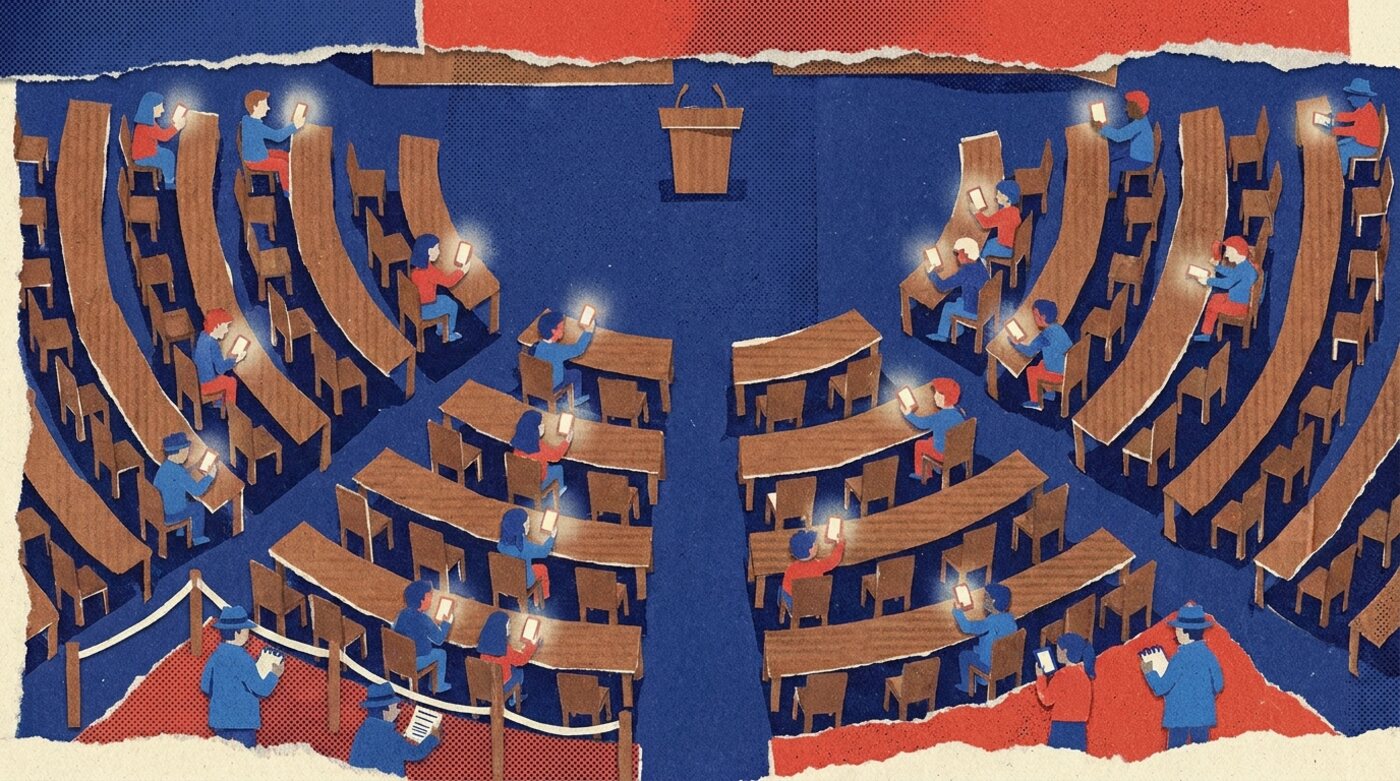
That gap is the subject of a growing argument in Europe, and the same question is unsettled in Britain and Australia. News creators now reach large audiences, but the law has no settled category for them. They are not quite journalists, not quite advertisers and not quite publishers. That matters for their access to power, for their protection from platform takedowns, and for the brands that sponsor them.
Europe defines the influencer, as a seller
The European Commission published its proposed Digital Fairness Act on November 11. It is a regulation that would replace the Unfair Commercial Practices Directive, and it would be the first EU law to define influencer marketing. Article 3(15) of the proposal calls it "a commercial practice whereby traders use their popularity among their audience to directly or indirectly promote products in exchange for payment". Recital 56 makes clear that payment includes "any other form of consideration having an asset value", so gifts and invitations count. As we reported, Article 11 would require sponsored posts to be labelled with the words "advertisement" or "commercial collaboration", and make brands ensure their creators comply.
The Commission's evidence is strong. A 2024 sweep by the Commission and national consumer authorities checked 576 influencers: 97% had posted commercial content, but only 20% consistently disclosed it as advertising.
What the proposal does not do is say what a creator is when they are not selling. The explanatory memorandum says the disclosure duties are "confined to communications made in return for payment or other valuable consideration and do not extend to editorial or personal expression". That sentence sits in the Commission's covering text, not in the articles of the regulation itself. Elsewhere, the word "editorial" appears only in Recital 56, which says brands are liable "irrespective of the degree of editorial freedom conferred to the influencer".
Mustafa Kuleli made the point in a Voxeurop opinion piece on November 20. He argued that the proposal treats creators only as an advertising channel, gives them liability without representation, and has no category for news creators who report or explain politics. He called for the editorial carve-out to be written into the articles, for standard contracts, and for creators to organise. Creators' groups, he noted, were not among the bodies named in the Commission's consultation.
A second EU law points the other way
Europe already has a law for journalism on platforms. Article 18 of the European Media Freedom Act lets "media service providers" declare themselves to very large online platforms, which must then warn them and give them a chance to respond before removing their content. The Commission published guidelines on how platforms should run those declarations in February.
The test, though, is built for newsrooms. A media service provider must have editorial responsibility for its output as a professional activity, and must declare that it is editorially independent and subject to regulatory supervision or a recognised self-regulatory system for editorial standards. A solo YouTuber with no editor and no press council has no obvious way in. So a creator who explains the news could be treated as an "influencer" under one EU law and not count as "media" under another.
Some groups are trying to close the gap from the other side. Kuleli points to the Danish Union of Journalists, which has opened its doors to creators. It already hosts an influencer section and has backed an ethics board that influencers can sign up to.
Britain: journalism yes, publisher no
Britain has written something closer to a definition, almost by accident. The Online Safety Act requires the biggest platforms, the ones Ofcom designates as Category 1, to protect "journalistic content". Section 19 defines it as news publisher content or ordinary user-generated content that is "generated for the purposes of journalism" and linked to the UK. A UK-based creator whose video is taken down can use a dedicated, expedited complaints route, and the video must be swiftly reinstated if the complaint succeeds.
The stronger protection is reserved for a "recognised news publisher" under section 56. Besides the BBC, S4C and licensed broadcasters, qualifying publishers must have news as their principal purpose, material "created by different persons" and subject to editorial control, a standards code, a complaints process and a UK business address. A one-person channel fails the "different persons" test by definition, however large its audience.
Those audiences are significant. The Reuters Institute found that 18% of people in the UK consume content from a news-focused creator each week, with Dylan Page (News Daddy) at the top of its list with 19 million TikTok followers. Ofcom's 2026 news report, published in September, found that among children who get news on TikTok, more saw it from influencers or independent commentators (46%) than from UK broadcasters (42%). Access is shifting too: Downing Street has gone social-first, to the anger of the Westminster press pack.
Australia: invited in first, rules later
Australia let creators into the room before writing any rules. In March 2025, the federal government invited social media creators to the budget lock-up for the first time, alongside traditional media. SBS News reported that Labor confirmed it had "provided logistical support to some content creators", saying there had been no payment for content or opinions. One attendee, Molly Benjamin of Ladies Finance Club, told SBS the party paid for flights and accommodation but not for any posts. Another, Hannah Ferguson of Cheek Media, said she paid her own way. Senator Jacqui Lambie welcomed engaging young people but called the arrangement "marketing".
The Reuters Institute's 2026 Australia report, by Sora Park, says influencers became major political communicators during the 2025 election campaign, and warns that uneven quality and the absence of agreed journalistic standards raise concerns. Its earlier mapping study found a mix of home-grown independents, such as Michael West of Michael West Media and Jordan Shanks of Friendlyjordies, and foreign voices: overseas personalities, mostly from the US and UK, made up 87% of Australia's 15 most-mentioned names.
Why the definitions matter
Globally, the Reuters Institute found that 27% of people get information from news creators each week. Its 2025 mapping study found that under-35s who use social media for news named creators (48%) more often than mainstream outlets (41%). Regulators have mostly regulated the selling side, because that is where consumer law already reaches. Questions about standards, corrections and access have been left to platforms and to whichever politician sends the invitations.
What it means for creators
If you cover news and also take sponsorships, expect to be treated as an influencer for every paid post, wherever you are in Europe, and expect the label to be strict once the Digital Fairness Act passes. Keep your editorial and paid work clearly separated. In the UK, know that the journalistic content complaints route exists if a large platform removes your reporting. Creators who want press-style access and protection will find that a published standards code, a corrections policy and a complaints process count for more than follower numbers, because those are what the legal tests look for.
What it means for brands and agencies
Under the EU proposal, brands would be liable whatever editorial freedom they give a creator, and must ensure disclosure by contract or, if there is no contract, by other means. Sponsoring a news or explainer creator brings extra risk: the audience expects independence, and a missed label will look worse. Agencies should build disclosure checks into briefs for news creators now, rather than waiting for the final text.
Why it matters: News creators are a main source of news for a large share of young people in Europe, Britain and Australia, yet the law sees them mainly as advertisers. The Digital Fairness Act negotiations are the best chance to fix that in Europe. Until then, creators carry the duties of advertisers without the recognition given to journalists.